Why Goalkeeper Distribution Is the Hidden Engine of Build-Up Play
Every coach who has tried to play out from the back knows the sinking feeling: the defenders push up, the midfielders drop deep, and the goalkeeper still ends up hoofing the ball into a crowded midfield. The problem is rarely effort. It is usually a mismatch between what the keeper is asked to do and the quality of his distribution.
This article looks at goalkeeper distribution and build-up quality through the lens of a practical review. Rather than focusing on highlight-reel saves, I will evaluate what makes modern build-up succeed or collapse, using five criteria: transparency, speed, usability, security, and support. These are the same standards you would apply to any system you rely on under pressure.
Five Key Findings About Build-Up Quality
Before getting into tactical detail, here are the five conclusions that matter most when assessing a goalkeeper’s distribution.
- Short distribution is not automatically safer. A five-yard pass to a centre-back under pressure still carries risk. The safety comes from the positioning of the receiver and the timing of the pass, not from the pass distance itself.
- First touch decides everything. A goalkeeper who controls the ball cleanly buys a second of extra decision time. A heavy touch shrinks passing lanes faster than any press.
- Angles outperform power. The best distributions are often hit at moderate speed into forward space, allowing a teammate to run onto the ball. Wasted pace only increases the chance of a turnover.
- Footedness changes the tactical picture. A left-footed keeper opens the left side of the pitch much earlier. Teams that sign keepers without checking their weaker foot suffer structurally, not just in possession.
- Build-up is a team skill, not a keeper skill. The goalkeeper is the trigger, but his centre-backs, full-backs, and midfielders must offer the right angles. When only the keeper is confident, build-up collapses.
 Hình minh hoạ: da88
Assessing Distribution Quality: A Detailed Analysis
Distribution is a varied skill. A keeper faces several distinct situations: receiving a back-pass, distributing from open play, launching a long restart, and executing a quick throw or punt under pressure. Each one tests different aspects of technique and decision-making. To keep this review grounded, I will use the five criteria mentioned earlier and apply them to real match scenarios.
Transparency: Reading the Press and Seeing the Free Man
Transparency here means how clearly the goalkeeper can see and interpret what is happening in front of him. A keeper with good scanning habits knows where the opposing striker is, which passing lane is closed, and which teammate is about to be marked. This is the mental side of distribution.
Many teams set up a trigger press — a cue that makes the whole front line sprint toward one side. A keeper who reads that cue early can pass into the opposite space before the press fully engages. If he waits until the striker is close, his field of vision narrows and he is forced into a longer or riskier ball.
The transparency of a distribution system also depends on the coaching staff. Build-up patterns must be simple enough that the keeper can predict where his teammates will be. If every pass requires improvisation, the keeper is no longer distributing — he is guessing.
Speed: Tempo, Timing, and Release
Speed in distribution is not about how hard you hit the ball. It is about how quickly the decision is made and how effectively the pass is timed. In that sense, speed is linked to transparency. A keeper who sees the press early can release the ball in under two seconds, and that alone disrupts the opponent’s shape.
The other dimension is tempo control. Sometimes the right move is to slow everything down. A goalkeeper who holds the ball for an extra moment can lure the press forward, creating space behind it for a long pass to the winger. The best keepers make the press commit, then exploit the gap. This is a highly valuable skill that rarely shows up in standard possession statistics.
When looking at a goal kick or a back-pass, the tempo of the release matters even more. A fast, flat pass to a full-back who is facing forward is far more useful than a slow, looping ball that gives defenders time to reorganize.
Usability: Which Distribution Methods Actually Work?
Usability is about whether the keeper’s passing tools are practical under match pressure. There is a big difference between performing short passes in a training drill and executing them in a stadium full of noise and expectation.
The most usable distributions are:
- Bowed short passes into the centre-back’s stride, so the receiver does not have to break rhythm.
- Straight-length passes that travel parallel to the touchline, allowing the full-back to control with an open body.
- Driven long passes aimed at a striker’s chest or feet, rather than floated balls that invite aerial duels.
- Hand passes for quick restarts, which are often ignored in analysis but highly effective for counter-attacks.
Usability breaks down when the keeper only has one reliable tool. For instance, a keeper who can only punt long becomes predictable, and the opposing team simply pushes up and wins the first ball repeatedly. Conversely, a keeper who only plays short gives opponents a clear blueprint: press hard and force errors.
Security: Managing Risk in Possession
Security refers to the keeper’s ability to minimize the cost of failure. In build-up play, no pass is ever completely safe. The best keepers understand this and actively reduce the damage of a turnover.
Positioning is the first layer of security. A goalkeeper standing 18 yards off his line can receive a back-pass in relative comfort, but he also leaves a bigger gap behind him. A single mis-control can lead to an empty-net opportunity. On the other hand, staying too close to the line reduces passing options and invites opponent pressure.
Secure keepers use the full width of the penalty area, move laterally with the play, and never take a touch toward the press unless they are certain they have escaped it. They also know when to abandon the short pass and go long. This is not fear — it is risk management.
The second layer of security is communication. A goalkeeper who loudly directs his centre-backs, full-backs, and defensive midfielders prevents the small misunderstandings that usually lead to goals. In many cases, a poor distribution is actually a communication error.
Support: How the Outfield Players Elevate the Keeper
Support is the surrounding system that makes a keeper’s distribution possible. It includes the width provided by full-backs, the drop-off movement of centre-backs, the body orientation of midfielders, and the willingness of the striker to pin the opposing centre-backs.
A fascinating detail in build-up analysis is the role of the inverted full-back. When one full-back steps into midfield, the keeper gains an extra passing lane and the opponent’s mark shifts. This creates space in wide areas that a capable keeper can exploit with a diagonal pass.
Support also covers the number of available passing options. If the outfield players stand still, the keeper has nowhere to go. Modern build-up systems therefore emphasize rotations, one-touch layoffs, and sideways movement that opens up new angles. When analysts say a team has good build-up quality, they are usually describing this collaboration — not just the keeper’s feet.
In a practical sense, support is something you can review from the stands. Watch a match and count how many times a keeper attempts a short pass that results in a backward movement because the receiver was not ready. The number is usually higher than expected. That is a support failure, not a distribution failure.
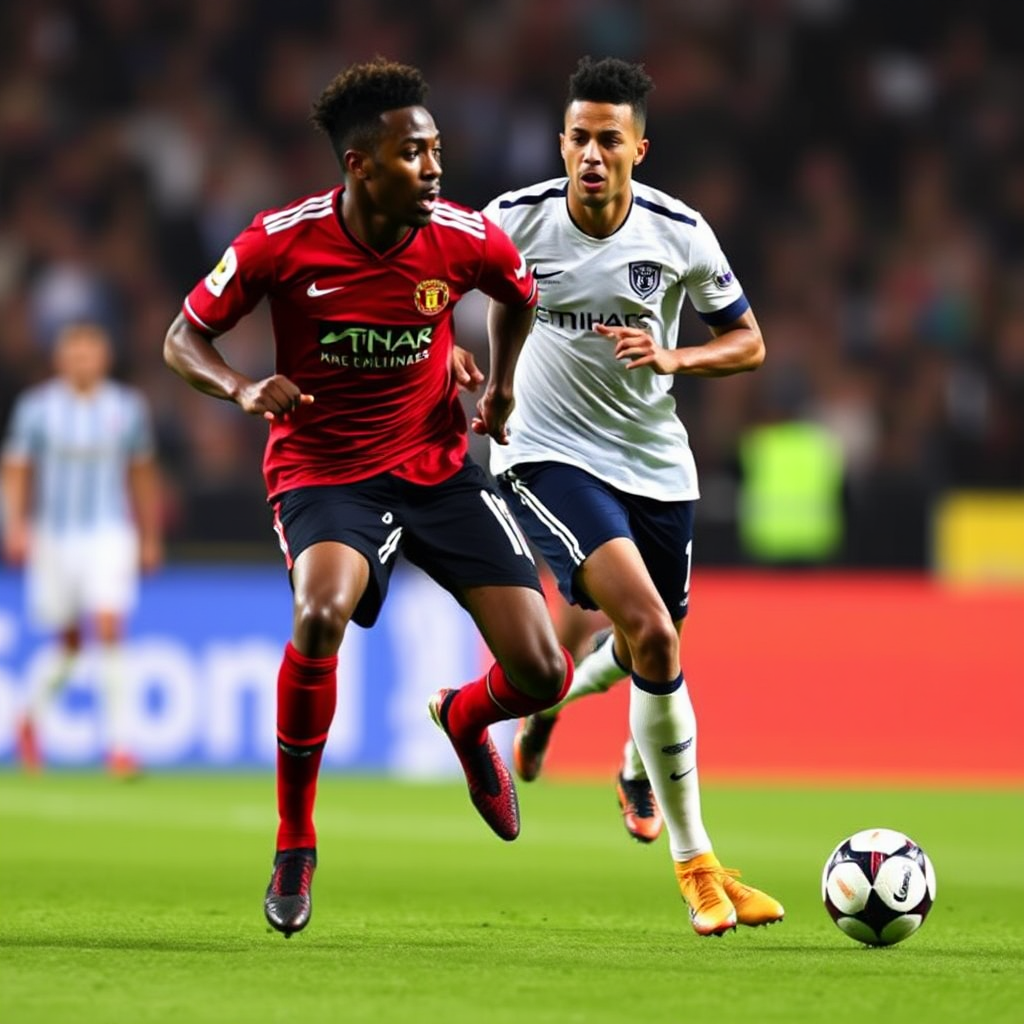
Comparison: Distribution Styles at a Glance
Different teams and playing contexts demand different distribution profiles. The table below compares the three broad styles used in modern football.
| Style | Core Emphasis | Strengths | Weaknesses | Best Suited For |
|---|---|---|---|---|
| Short build-up | Passing to centre-backs and midfielders | Breaks the first line of press; keeps possession in advanced areas | Vulnerable to high-pressing teams; requires skilled outfield players | Teams comfortable with risk and possession |
| Long distribution | Diagonal punts and goal kicks to target players | Bypasses pressure; less risk near own goal | Low possession retention; depends on aerial duels | Teams with a strong target striker or weaker midfield |
| Hybrid / adaptive | Mixing short and long based on the press shape | Unpredictable; keeps opponent guessing | Requires high game intelligence and leadership | Flexible teams who read the game well |
The table highlights a crucial point: there is no single superior distribution style. The right choice depends on the players, the opponent, and the match situation. Fans who criticise a keeper as just a long-ball merchant or a short-passer who cannot handle pressure are usually judging against a style preference rather than what actually works for the team.

Who Benefits from This Analysis and Who Can Skip It
Coaches, amateur players, and football analysts all benefit from understanding goalkeeper distribution. Even casual fans enjoy matches more when they see how a keeper’s positioning opens space. If you are a goalkeeper yourself, this review has direct application: it gives you a mental checklist for every distribution decision.
On the other hand, you can skip this level of detail if you only care about shot-stopping. Distribution is part of the modern role, but classic goalkeeping — shot stopping, claiming crosses, and organising the wall — remains the foundation. A keeper with average feet and brilliant shot-stopping may still succeed if the team builds play without him. Likewise, a fantastic distributor who cannot make saves is not a goalkeeper anyone needs.
Junior and academy players should especially pay attention to the support criterion. Many young keepers feel blamed for build-up failures that actually stem from teammates not offering passing angles. Learning how to communicate that need to defenders is a vital skill on the pitch. It is also one of the first things a strong goalkeeper coach evaluates when assessing a young prospect.
Practical Recommendations for Improving Build-Up Quality
Improving distribution and build-up quality is a systematic process. Here are the steps that work, regardless of level.
- Film and count your distribution outcomes. Categorise each pass as a success, a neutral, or a turnover. Review at least three matches to identify patterns.
- Develop a clear trigger system. Decide in advance what visual cue starts the short build-up and what cue makes the keeper go long. Remove guesswork.
- Train in contested conditions. A keeper who practices short passes without defenders learns nothing about press resistance. Add at least one pressing opponent in every drill.
- Work on both feet intentionally. Even if the keeper is naturally left-footed, forcing him to make simple passes with the weak foot in drills expands the entire team’s options.
- Use hand passes to restart quickly. Many teams waste time rolling the ball out when a quick underarm throw could catch the opponent off guard.
- Choose pass types based on the receiver’s profile. Do not hit a low-driven pass to a striker who thrives on high balls. Know your teammates.
Beyond these steps, a team should regularly run pressure drills in which the keeper receives a back-pass and has to make a decision within two touches. The objective is not to complete every pass, but to make the right decision with limited time. That skill is trainable, and it produces visible improvement in match conditions.
FAQ: Short Answers on Goalkeeper Distribution
Why do so many keepers prefer to go long under pressure?
It is a defensive priority. A long ball into the opponent’s half is less dangerous than a turnover near your own goal. It also requires less coordination with teammates.
Is good distribution required for every goalkeeper style?
No. Some teams play defensively and rely on long clearances. But if a team claims to play a possession-based game, the keeper must be able to participate under pressure.
How much of build-up quality is about the keeper’s feet?
Technique is important, but positioning and scanning are even more critical. A keeper who knows where the opponent’s press is coming from can compensate for average technique.
What is the fastest way to improve build-up play?
Improve the outfield players’ support. Keeper distribution cannot function without good spacing and movement. Working on that connection is more effective than drilling the keeper alone.
Key Risks to Remember
Build-up play from the goalkeeper still carries real dangers. The most obvious is the turnover close to your own goal. A single bad pass to a centre-back can gift the opponent a shooting chance, and the psychological impact can ruin a keeper’s confidence for a long stretch of the season.
There is also the risk of over-complication. When a team obsesses over build-up quality, they may neglect other important aspects such as directness, crossing, and second-ball attacks. A keeper who is told never to go long loses the element of surprise. Every top team today mixes the two approaches.
Financial risk is relevant here too, in an unexpected way. Clubs pay large fees for keepers whose distribution is considered elite, yet those same keepers can fail in a system that lacks the support structure. Well-run clubs assess the full environment before signing a keeper, but many still chase a big name without checking whether the midfield can receive passes under pressure. A prudent evaluation of a tactical review or an analysis platform can help avoid such missteps. Platforms that simplify tactical metrics — such as da88 for match breakdowns — are best used as starting points for your own critical thinking, not as substitutes for live observation.
The same logic applies to fans placing emotional or financial weight on a team’s build-up stats. Match statistics often use a simplified definition of possession or pass completion that does not capture the difficulty of a pass or the weakness of a pressure situation. Remembering that gap is essential when you see an impressive-looking distribution chart.
Responsible viewing also extends to those who enjoy match analysis on platforms like da88 sh. Use any platform you like for reference, but always anchor your judgement in what you actually see on the pitch and what you can verify for yourself.
The final risk to keep in mind is confirmation bias. If you believe a goalkeeper is good with his feet, every successful short pass reinforces that view, while every error is blamed on a teammate. The opposite happens with a keeper you distrust. Honest, transparent analysis is the only way to avoid this trap.